

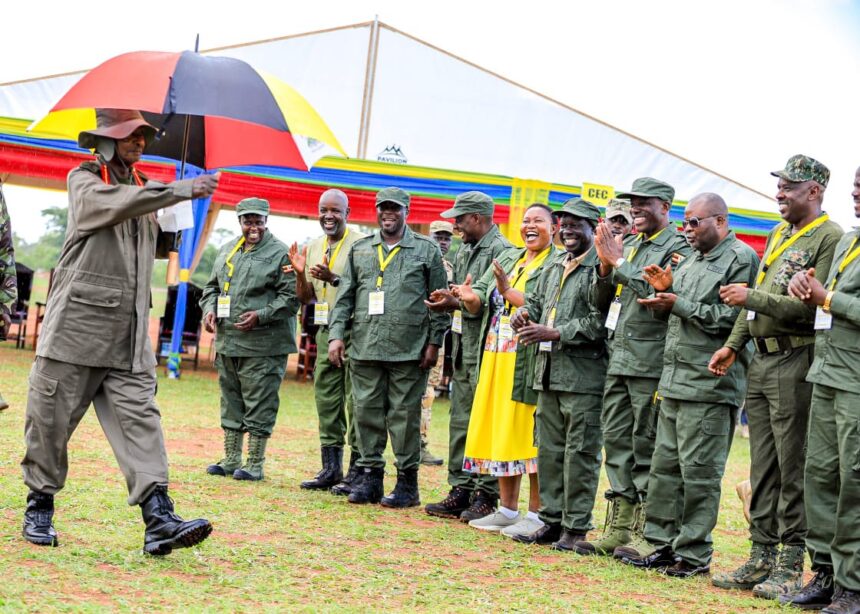
The National Leadership Institute (NALI), Kyankwanzi, is a government leadership training institute established during the NRA liberation period of 1980-86 and now operating under the Office of the President. The institute runs retreats and courses for MPs, party leaders, public servants, security personnel and civilians, combining ideological grounding with practical leadership training.
This specific retreat, running from 7th to 15th April 2026, is meant to orient MPs, ministers and other party leaders on the ruling party’s legislative agenda to align with the national development priorities, helping legislators draft and support bills that fit broader policy goals.
The retreat will equip the newly elected MPs with practical legislative training, party and national policy orientation, ethical leadership development, and a platform for cross-sector networking that strengthens constituency service and national governance. The retreat aligns with national priorities, sharpens oversight skills, and builds coalitions for effective lawmaking. The core values and importance of the retreat are to ensure that the MPs of the 12th parliament get a real sense of what their responsibility as the National Assembly is. It also includes training with case studies, policy simulations and legislative role plays that improve bill scrutiny, committee work and oversight capacity.
The participants will be syndicated into discussion groups on specific thematic areas like universal primary and secondary education, vocational skilling programs, science, ICT and innovation, special interest groups, energy resources and mineral development, cultural institutions and development, export promotion and balance of trade, regional integration, corruption, syndicate crime, urbanization, industrialization, agricultural value addition & commercialization, private sector development, infrastructure investment, wealth creation and many others. This helps in shaping the leaders by fostering ideological alignment. Enhancing teamwork and strategic planning for national development, the retreat’s emphasis is on accountability, integrity and zero tolerance for corruption.
The retreat will also help in the cross-sector networks where participants meet senior civil servants and party leaders, creating channels for synergized problem-solving, cutting out government bureaucracy.
It now depends on the newly elected leaders to grasp and conceptualize the teachings and discussions in the retreat. It will help them align with the national development objectives while exercising their legislation and oversight roles. At the end of the retreat, participants should be able to come up with an action plan on execution of their legislative and oversight roles, including assigning time