

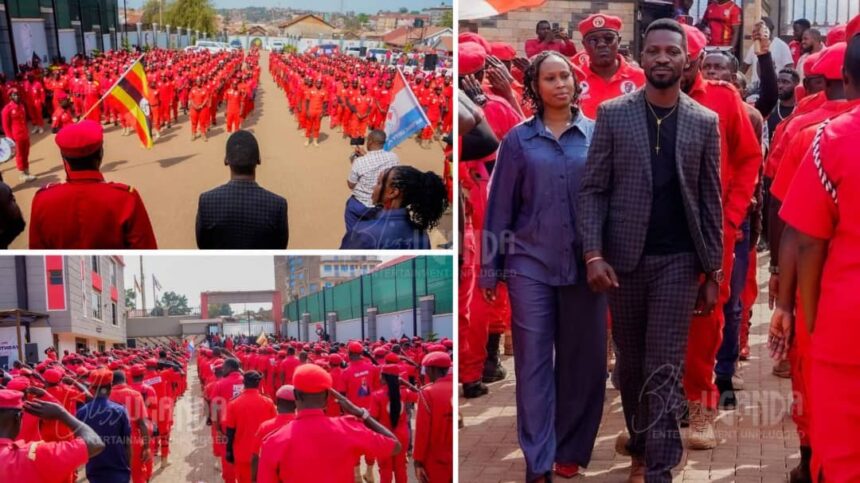
Why conducting drills and parades without permission is legally problematic. Public order and security fall within the state’s remit; assemblies and paramilitary activities that resemble organized military training may be treated as threats to national security and public order, giving authorities legal grounds to intervene. Uganda’s authorities were so right to charge some of the members of the National Unity Platform for participating in “unauthorized military drills” and for conspiring to commit offenses under the Penal Code, signalling that security institutions view such activities as criminal unless properly authorized.
Unlawful drilling
Any person who, without the permission of a minister, trains or drills any other person in the use of arms or the practice of military exercises, movements or evolution, or is present at any meeting or assembly of persons, held without the permission of a minister, for the purpose of training or drilling any other persons in the practice of military excesses, movements or evolutions, commits a felony and is liable to imprisonment for seven years.
Any person who, at any meeting or assembly held without the permission of a minister, is trained or drilled commits an offence and is liable to imprisonment for a term not exceeding five years.
Uganda’s authorities charged some NUP leaders for participating in “unauthorized military drills” and for committing offences under the Penal Code, signalling that security institutions view such activities as criminal.
Political and practical risks of holding drills without authority lead to legal consequences like arrests, criminal charges, and asset seizures,
Public perception: Unauthorized drills can be presented by state actors as evidence that a political group is preparing for violence, undermining public trust and the party’s legitimacy.
Safety and escalation: Unplanned or poorly supervised drills risk accidents or confrontation with law enforcement, increasing the possibility of harm and escalation.
Definitions of lawful assembly versus security threats, but it does not remove the legal requirement to coordinate events that resemble organized drills with authorities when those activities raise security concerns.
Conclusion and practical advice for political actors:
Any political Organisation that intends to hold public parades, marches, or organized drills should proactively seek the necessary permits and coordinate with the relevant ministry or police to avoid legal exposure and reduce the risk of escalation.
Transparency with authorities and the public about the purpose, scale, and safety measures for such events reduces suspicions, protects participants, and preserves democratic space for lawful political expression.